What Is USDT? Peg Logic, Common Uses, and Risks Beginners Should Know
This page is maintained by the BN All Coin - Binance Coin Glossary and Market Lexicon editorial team and cross-checked against platform rules, product docs and internal topic pages.
If platform rules change, treat the official documentation as the final source of truth.
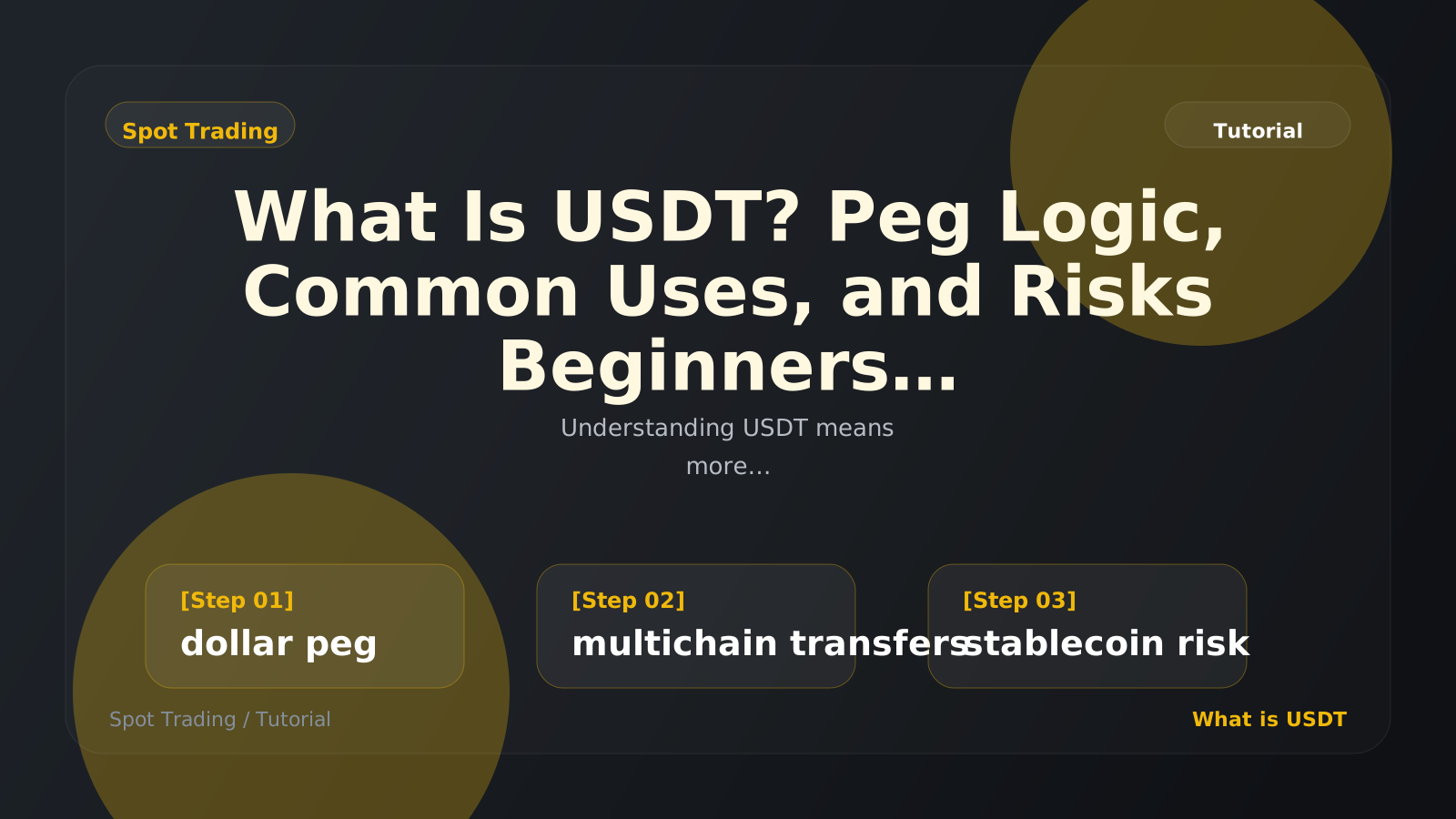
USDT is often the first stablecoin people see when they enter crypto. It looks simple because the price usually stays close to one dollar, but using it well depends on more than the peg. You also need to understand the issuer, the network you are using, where the funds arrive, and what you plan to do next.
From spot trading pairs to onchain transfers and temporary cash parking, USDT appears everywhere. For beginners, the goal is not to memorize a definition. The goal is to understand what problem USDT solves and where mistakes usually happen.
The core idea behind USDT
USDT is issued by a centralized issuer and is designed to stay close to one U.S. dollar. Official disclosures focus on reserves that support the token, while the market usually cares about liquidity, redemption confidence, and whether users still treat it as a practical dollar proxy during stress.
That means USDT is not a bank deposit and it is not a yield product. In practice, it is one of the most widely used dollar-denominated tools in crypto.
The three most common uses of USDT
- It acts as a quote asset for BTC, ETH, BNB, and many other trading pairs.
- It works as a funding bridge before you move into spot trading or other products.
- It is used for transferring value between exchanges and wallets across supported chains.
The risks beginners miss most often
- Network risk: the same USDT can live on different chains such as ERC20, TRC20, and BEP20, and a wrong network can be more dangerous than a slightly worse price.
- Issuer risk: USDT depends on a centralized issuance and operating model, so it is not the same thing as decentralized dollars.
- Liquidity assumptions: deep liquidity on major venues does not mean every smaller venue or every chain has the same execution quality.
Four things to check before using USDT on Binance
- Decide whether you are buying, depositing, withdrawing, or only parking funds.
- Confirm which account will hold your USDT: spot, funding, or an external wallet.
- Match the network with the destination and balance fees against confirmation speed.
- Test with a small amount before sending size, especially when addresses, networks, or memos are involved.
When does USDT make sense for you
If you care most about liquidity, broad acceptance, and trading frequency, USDT is usually one of the first stablecoins to consider.
If you care more about reserve structure, compliance framing, or decentralization, then following the crowd is not enough. The safer workflow is simple: define the use case first, choose the stablecoin second, and choose the network last. That order reduces mistakes.