What Is DAI? How a Decentralized Stablecoin Works and What to Check First
This page is maintained by the BN All Coin - Binance Coin Glossary and Market Lexicon editorial team and cross-checked against platform rules, product docs and internal topic pages.
If platform rules change, treat the official documentation as the final source of truth.
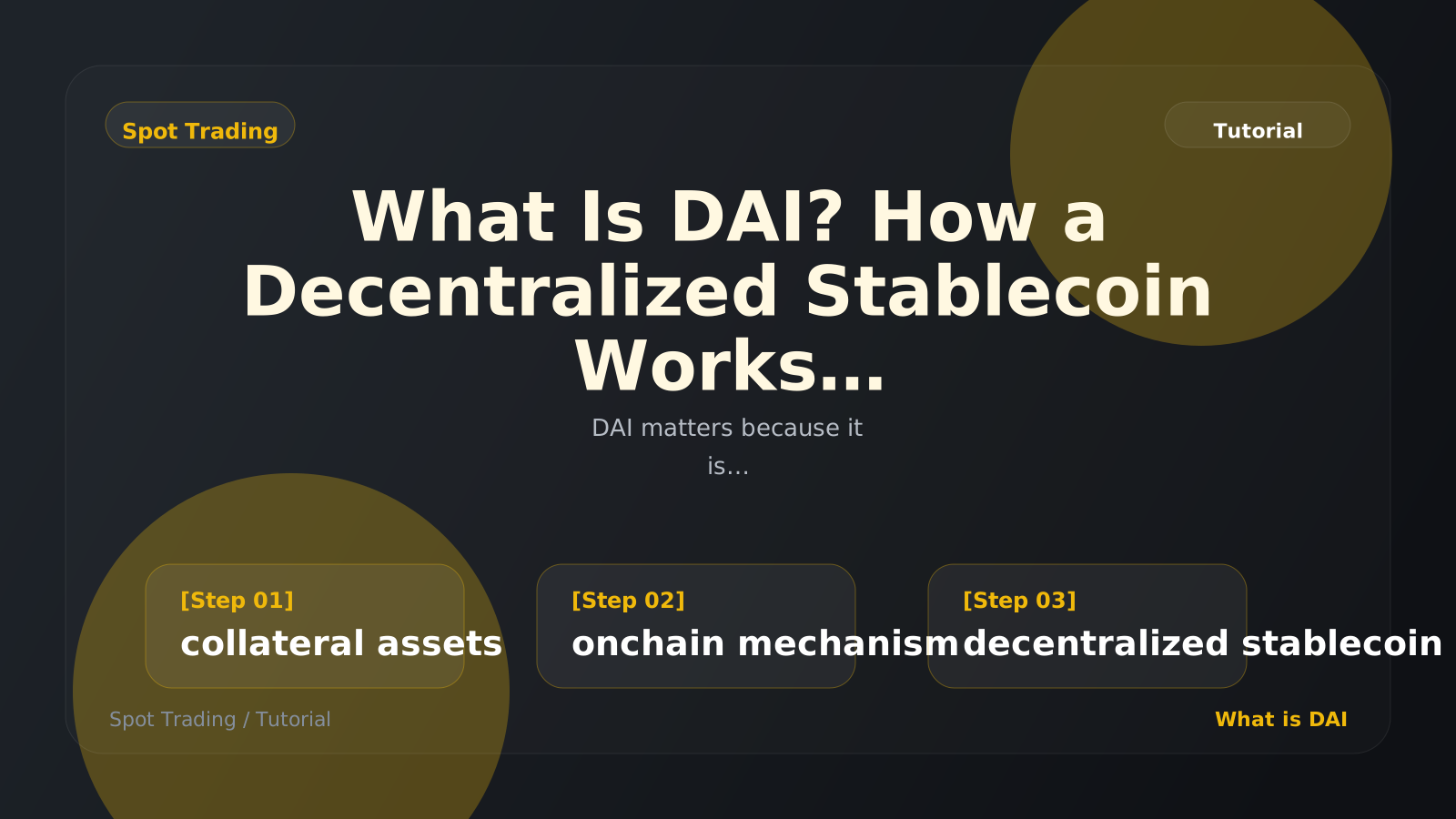
DAI is one of the most important names for anyone trying to understand decentralized stablecoins. The biggest difference between DAI and centrally issued stablecoins is not that they all aim for roughly one dollar. The real difference is how they try to get there.
DAI is built around collateral, protocol rules, and onchain stabilization mechanics rather than a single issuer simply minting tokens against a reserve account. That is why learning DAI also means learning part of DeFi.
The core idea behind DAI
DAI comes from the Maker Protocol multi-collateral system and continues to exist within the current Sky ecosystem. Collateral assets, governance parameters, stabilization modules, and liquidation logic all play a role in keeping DAI near the dollar.
This gives DAI stronger decentralization and onchain composability than many centrally issued alternatives, but it also means the product is not as simple as “just another dollar token.”
Common ways DAI is used
- As a base stable asset inside DeFi protocols.
- As part of a stablecoin allocation for users who do not want to rely entirely on a single centralized issuer.
- For borrowing, swapping, liquidity management, and other onchain activities.
Risks you should understand before using DAI
- Collateral risk: the assets backing the system can move, and that affects overall stability.
- Mechanism risk: governance, liquidation, and stabilization tools are real design layers, not marketing words.
- Relevance risk: if you do not use DeFi or onchain composability, many of DAI’s advantages may not matter to you in practice.
Four things to check before using DAI on Binance
- Are you choosing DAI for its decentralized design, or because you simply need any stablecoin?
- Do you plan to move it into onchain protocols later, or keep it only inside an exchange?
- Do the current trading depth, costs, and supported networks match your actual route?
- Do you understand that DAI, USDT, and USDC do not rely on the same stabilization model?
Who is DAI best suited for
If you care about composability, protocol structure, and decentralization, DAI is worth studying carefully.
If your only goal is to buy a stablecoin quickly and move on to a spot order, then liquidity, network support, and execution simplicity may matter more. For many beginners, learning DAI is valuable because it teaches how decentralized finance stabilizes value instead of outsourcing everything to a single issuer.